The Complete London Resin Installation Method

What is the Best Resin Installation Process?

The right resin installation process shapes how strong, smooth and consistent the final surface becomes.

This 12-step resin installation process illustrates how each project progresses from initial ideas to the final, hand-trowelled surface. Every detail is handled transparently, skillfully, and with care.

Tap the InstaBrochure™ button to request the London Resin Method luxury brochure.

The London Resin Method and resin installation process - 12 step guide to durable resin surfaces in the London area from Cherry Home Improvements.

The London Resin Method

Premium resin driveway outside a London home

Across London’s village-style suburbs and leafier streets, resin surfacing has moved quietly from being a practical alternative to becoming a sign of considered design. Spaces in Richmond, Wimbledon Village, Hampstead Garden Suburb, Blackheath and Dulwich are now using resin to bring calm, cohesion and a sense of ease to the areas that frame the home.

These are not shared car parks or estate forecourts. The London Resin Method is created for homes with their own frontage, private courtyards or shared driveways between a small number of neighbours. In those settings, presentation matters. The area in front of the house is often the first thing seen in the morning and the last thing seen at night, and it quietly influences how the whole property feels.

When the process behind that surface is thoughtful, the result feels different underfoot and looks different from the kerb. This page walks through the stages that protect your property, your investment and your long-term peace of mind.

The London Resin Method

From first idea to finished surface, each stage of the London Resin Method has a clear purpose. Some stages protect structure and drainage. Others protect appearance, access and day to day usability. Most of all, the method is designed to remove the doubts that often sit in the back of a homeowner’s mind when planning a major change to the outside of the property.

Below is the complete journey, from initial assessment through to aftercare and client appreciation, shaped by experience on London homes where character and kerb appeal must be kept in balance.

On site resin surfacing assessment in London

1) Consultation & Site Assessment

The process starts with a calm, thorough look at how the space actually works. A site manager walks the area with you, noting where vehicles park and turn, where people naturally cut across, how deliveries arrive and which routes guests tend to follow when they visit. In London driveways and courtyards, these small patterns make a big difference to how the surface should be designed.

Levels, falls and drainage behaviour are recorded carefully so the layout suits real life, not just a flattering photograph. Particular attention is paid to existing drains, manhole covers, tree roots and changes in level between neighbouring properties. All of this helps to avoid uneven patches, standing water or awkward transitions later.

This is also the moment to talk through any quiet worries. Common questions include how resin performs under heavier vehicles, whether it will suit a period façade or how it compares with block paving or tarmac. Shared notes often include ideas from the resin vs traditional surfaces guide so options can be narrowed down early with confidence.

2) Walk-Around & Video Briefing

After the initial visit, a detailed video walk-around is recorded so the whole team can see the exact layout before they arrive on site. The recording captures steps, door thresholds, access paths, tight turning circles and any sensitive areas such as existing planting, walls or historic features that must be protected.

This simple step prevents surprises on installation day. Instead of relying on memory or sketches, everyone involved can refer back to the same footage and raise questions in advance. Homeowners often find that watching the video back gives a fresh perspective, seeing the space as one connected area rather than separate pieces of driveway, path and patio.

On site insight: During one London project, reviewing the video revealed an older soakaway disguised by gravel. The base layout was adjusted before work began so drainage improved and the final finish remained level and consistent.

Video overview taken during a London resin site assessment
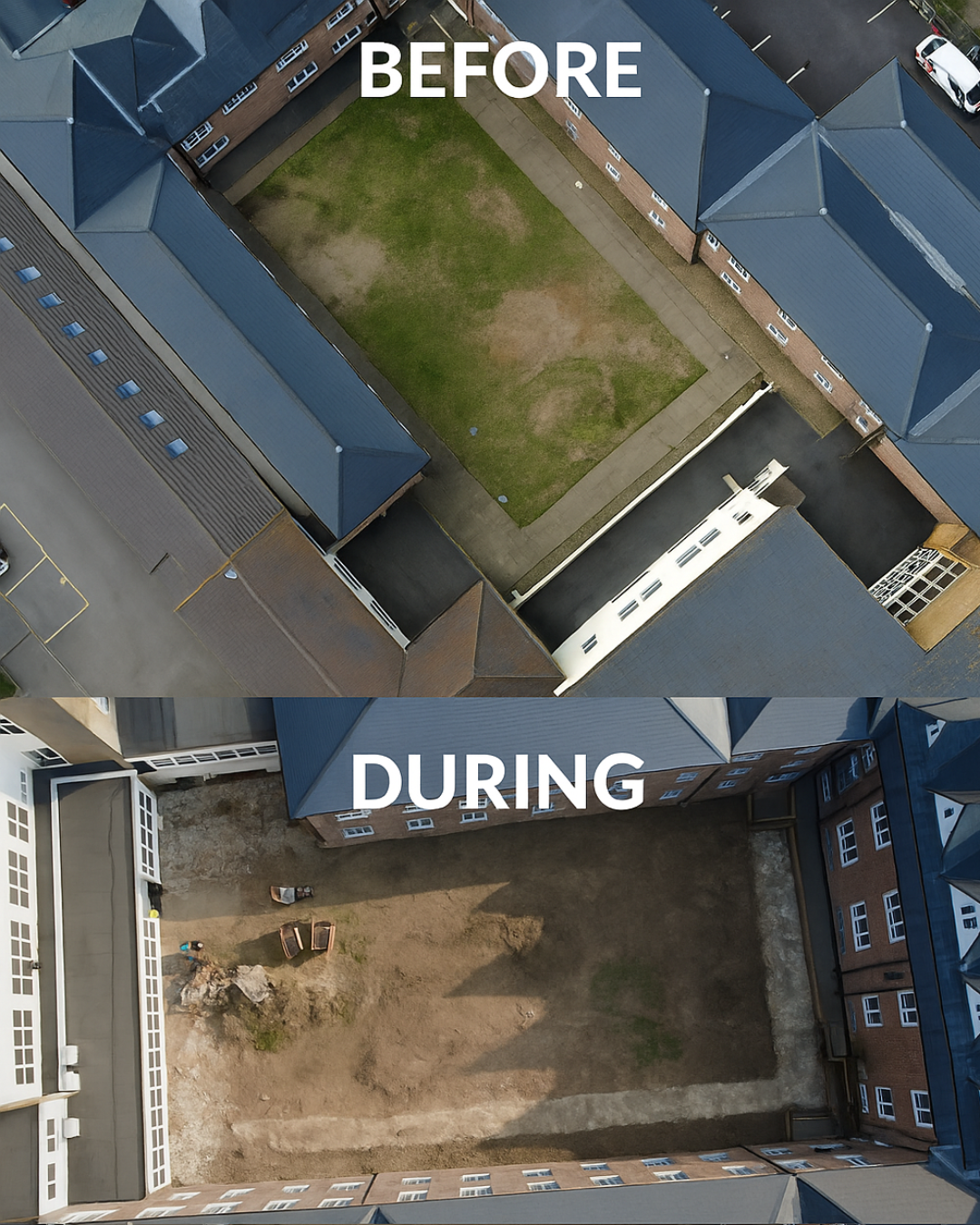
Drone or digital survey for resin driveway planning

3) Planning, Survey & Visual Mock Ups

Larger or more complex London plots often benefit from a measured survey, carried out using a drone, smart app or traditional methods where appropriate. A scaled plan confirms boundaries, gradients, steps and edging lines so that the finished resin surface aligns naturally with walls, lawns, flower beds and neighbouring properties.

From there, visual mock ups show how different layouts and blends would sit against the actual home. This is particularly useful where there are mixed materials, such as London stock brick, modern extensions, glass balustrades or established trees. The visuals help every decision maker in the household see the same thing, rather than trying to imagine it from description alone.

Extra inspiration can be found in the interactive before & after examples, which show how similar spaces have been transformed while still respecting the character of the property.

4) Quote, Documents & Approvals

Once the layout and system have been agreed in principle, a clear written quotation sets out what will be done in plain language. The base build, resin system, edging treatments and any drainage adjustments are explained in a way that makes sense without needing technical knowledge.

Warranty details, insurance information and terms sit alongside the quote so you can scan everything in one place. This is also a good stage to revisit the homeowner resources hub and look again at base build diagrams and drainage notes in the context of your specific proposal. Any remaining questions can then be answered before you feel comfortable giving a formal approval.

Transparent resin driveway quote documents
Resin driveway installation date confirmation

5) Save the Date Confirmation

Once the quote is accepted, an installation window is booked and confirmed in writing. In busier London months this often sits several weeks ahead, which gives you space to organise parking, access and any small garden or front-of-house tidy ups you would like to complete first.

Many households use this stage as a natural anchor point, lining up decorators, landscapers or other trades around the same period so the whole frontage comes together at once. Having a clear date in the diary removes that lingering uncertainty and makes it easier to keep family members and neighbours in the loop.

6) Style Matching & Material Selection

Resin blends, edging and finishing details are chosen to work with the specific character of your London home. Samples are viewed against brickwork, render, cladding, roof tiles, doors and planting at different times of day so the chosen blend feels just as good in soft evening light as it does at midday.

This is the stage that protects against one of the most common regrets, choosing a colour in isolation that looks very different once it covers a larger area. Seeing samples in natural daylight, in place, allows you to notice how tones shift with changing light and weather.

A curated sample pack from the Choose My Finish page makes comparison easier. Blends can be laid out side by side, and it often becomes obvious which one feels right for both the architecture and the way you want the home to feel.

Comparing resin bound blends at a London home
Resin bound base preparation and permeable sub-base

7) Base Preparation

Long term performance begins beneath the resin itself. Existing surfaces are either broken out or assessed carefully, levels are set and an appropriate sub base is compacted for either permeable or non permeable designs, depending on the agreed drainage approach and the nature of the site.

Edging restraints, recessed covers, channel drains and thresholds are positioned and aligned so that everything sits neatly once the resin is laid. This is the stage where the invisible heavy lifting happens. When done properly, it reduces movement, prevents dips and helps the finished surface shed water in a controlled and predictable way.

The base build resources explain what is happening under the surface and offer additional reassurance that preparation has been designed to support the resin for years, not just for its first season.

8) Cleaning & Priming (for overlays)

Where a suitable concrete or asphalt base already exists, the surface is cleaned methodically to remove moss, dust, tyre residues and general contamination before priming. This helps the resin bond fully across the area rather than only at isolated points.

A well prepared overlay can refresh a tired looking surface without the disruption of a full dig out, provided that the base is structurally sound and drainage is appropriate. In many London streets, this option allows the outside of the home to be transformed while keeping disturbance to neighbours low.

Any questions about whether your existing surface is suitable can be discussed in advance and cross-checked using the resin surfacing FAQs.

Cleaning the existing surface before resin overlay
Mixing aggregates with UV stable resin for installation

9) Mixing & Installation

High grade dried aggregates and UV stable binders are measured in controlled batches so the mix remains consistent from the first barrow to the last. The resin is blended fully before being laid, then spread and trowelled in a continuous run so the surface cures as one seamless plane without cold joints.

Particular care is taken around manhole covers, edging lines and junctions with other materials. These areas are trowelled carefully to avoid ridges, hollows or visible transitions. In warmer weather, timings are adjusted so the resin stays workable for the right amount of time yet still locks the stone firmly once cured.

Warm day adaptation: During a summer installation in Richmond, the driveway was laid in planned shifts using temporary shade structures. This kept the mix at a stable temperature, protected workability and allowed the surface to set cleanly ready for an evening gathering in the garden.

10) Hand Trowelling, Finishing & Inspection

Final hand trowelling refines the surface, removes marks and leaves the smooth, satin finish resin is known for, with enough texture underfoot to feel secure in all weathers. Edges are sharpened neatly, and any additional anti slip treatment is added in agreed areas such as slopes or main approach paths.

A daylight inspection follows, checking levels, falls and overall finish from several viewpoints, including the street, front door and upstairs windows. This is often the stage where homeowners remark that the surface already looks like it has always belonged there rather than a bolt-on addition.

Hand trowel finishing for a resin surface
Resin driveway aftercare guidance

11) Curing, Handover & Aftercare

Clear guidance is given on how long to leave the surface before walking across it, when to introduce lighter vehicles and when larger vehicles can return. These timelines protect the finish during its most vulnerable period and remove guesswork.

Simple, practical routines are shared to help keep the surface looking fresh with minimum effort. The resin care and maintenance guide explains how to brush, wash and spot clean without damaging the resin.

12) Follow Up & Email Updates

Email updates mark key milestones from planning and ordering through to installation and final sign off. These create a simple record of what has happened, when it took place and which products and systems were used on your project.

Many London homeowners keep these emails alongside documents from the homeowner resources section as a convenient reference pack for their property file. It makes future queries, valuations or potential house moves easier to manage because everything is already documented.

Milestone project update emails for resin installation
Annual draw for resin driveway care

13) Client Appreciation & Annual Draw

Every verified Trustpilot review submitted for Cherry Home Improvements is entered into an annual draw for complimentary resin surface maintenance. It is a simple way of saying thank you for taking the time to share your experience.

Those reviews are also a valuable guide for future homeowners, offering a view of the London Resin Method from a client perspective rather than a technical one. Reading them gives a sense of how the process feels when you are the one living with it, not just commissioning it.

Why resin bound often outperforms traditional options

  • Concrete or tarmac: resin bound can reduce visible cracking, soften the overall look and, with the right base build, support a more considered approach to surface water. Instead of rain simply running off towards the street, a permeable design helps manage it within the property boundary where appropriate.
  • Block paving: traditional blocks can shift over time, create trip points and invite weeds into every small gap. A resin bound surface locks the stone in place, removes most joints and delivers a calmer, blended appearance that still feels smart when viewed from the kerb.
  • Resin bonded: a sprinkle and stick finish leaves loose stone on the surface and is not designed to be permeable in the same way. Resin bound mixes stone and binder fully before laying, creating a smoother, more tactile finish that is kinder on shoes, tyres and bare feet.

Ready to feel that first barefoot step?

When the surface outside your front door feels soft, secure and deliberately chosen, the whole arrival at home changes. Whether you are starting with ideas or already have a clear layout in mind, the next step is simple. Explore blends at home in your own light or talk through a design assessment on site.

Soft texture resin surface for comfortable walking

Resin Installation Process – FAQs

What happens before resin is installed?

Before any resin installation process begins, the existing surface is assessed to confirm whether it can support a resin-bound system. This includes checking levels, drainage, substrate stability and the condition of any previous surfacing.

Examples of how base conditions influence resin driveway installations can be seen in the Driveways & Entrances section.

Preparation methods for resin patios and resin pathways are shown in Patios & Pathways.

Pool-side base requirements for slip-resistant resin finishes are demonstrated in Pool & Garden Spaces.

How long does the resin installation process take?

A typical resin installation process runs across one to two days. This depends on surface size, curing time, and the complexity of the base build. Most of our premium clients have larger surfacing requirements, which can take up to a week to dig out, prepare, and install.

Learn more about resin-bound surfacing standards from the British Board of Agrément, who certify resin materials across the UK.

When can the resin surface be used after installation?

After installation, the resin surface needs time to cure properly before it’s used.

In typical conditions:

  • Light foot traffic: after 24 hours

  • Garden furniture, bins and heavier foot traffic: after 48 hours

  • Vehicle traffic: usually 48–72 hours, depending on temperature and humidity

In cooler weather, shaded areas, or damp conditions, curing can take longer. If in doubt, waiting a little longer helps protect the finish.

Does the weather affect installation?

Weather conditions play a major role in the resin installation process because resin-bound systems need dry, stable temperatures for correct curing. Moisture can disrupt bonding, and low temperatures can extend curing time or create surface variation.

Seasonal examples of resin installations completed under the right conditions are shown in the HQ Project Gallery.

What makes a resin installation last longer?

Long-lasting results come from a solid resin installation process that includes correct base preparation, proper resin-to-aggregate ratios, even spreading, and controlled curing. Surfaces fail most often where the base is weak, uneven or incorrectly compacted.

You can read a full explanation of the installation stages and quality checks at your leisure by downloading The London Resin Method InstaBrochure™ here...

Technical information about resin materials and performance is outlined in the Vuba Resin Surfacing Method section.

Can existing surfaces be used as a base?

Some existing driveways, patios and pathways can be overlaid if they meet the structural requirements of a resin-bound system. The resin installation process relies on a firm, crack-free base, so unstable or crumbling surfaces must be repaired or replaced.

Examples of resin overlays and full base rebuilds are shown in the Case Studies section.

How does the resin installation process differ between driveways, patios and pathways?

The resin installation process follows the same core stages, but each area of a property has different practical demands. Driveways need a reinforced base to support vehicle weight.

See examples for driveways here:

Explore patios and pathways here:

View poolside and garden layouts here:

Why is the installation process so important?

The installation method is what makes a resin surface last. Colour blends and samples help with design, but the strength, drainage, smoothness and long-term appearance all come from how the surface is prepared and laid.

Levels, gradients, drainage, edging, mix ratios and curing conditions all affect performance. When these steps are handled properly, the surface stays stable, comfortable underfoot and consistent in colour. When shortcuts creep in, early cracking, loose stone and patchy areas become common.

The London Resin Method exists to remove that risk. It gives a clear sequence from assessment to installation so the finished surface feels intentional and works with the way the home is used day to day.

If you’d like to explore the details, these pages help:

Where can I find London-specific FAQs?

A dedicated set of London-focused questions, including regional installation considerations and aftercare tips, is available in the London FAQs.
Further advice on caring for new resin driveways, patios and pathways is provided in the Care & Maintenance Guide.

The Driveway Glow

Smooth, seamless, and made to last through every British season.

Garden Zone Style

Define dining, relaxing or entertaining in true low-maintenance charm.

Pathways with Flow

Beautifully edged and sure-footed, guiding every step with quiet confidence.

Pool & Spa Perfection

Naturally slip-resistant and dry underfoot thanks to the porous finish.